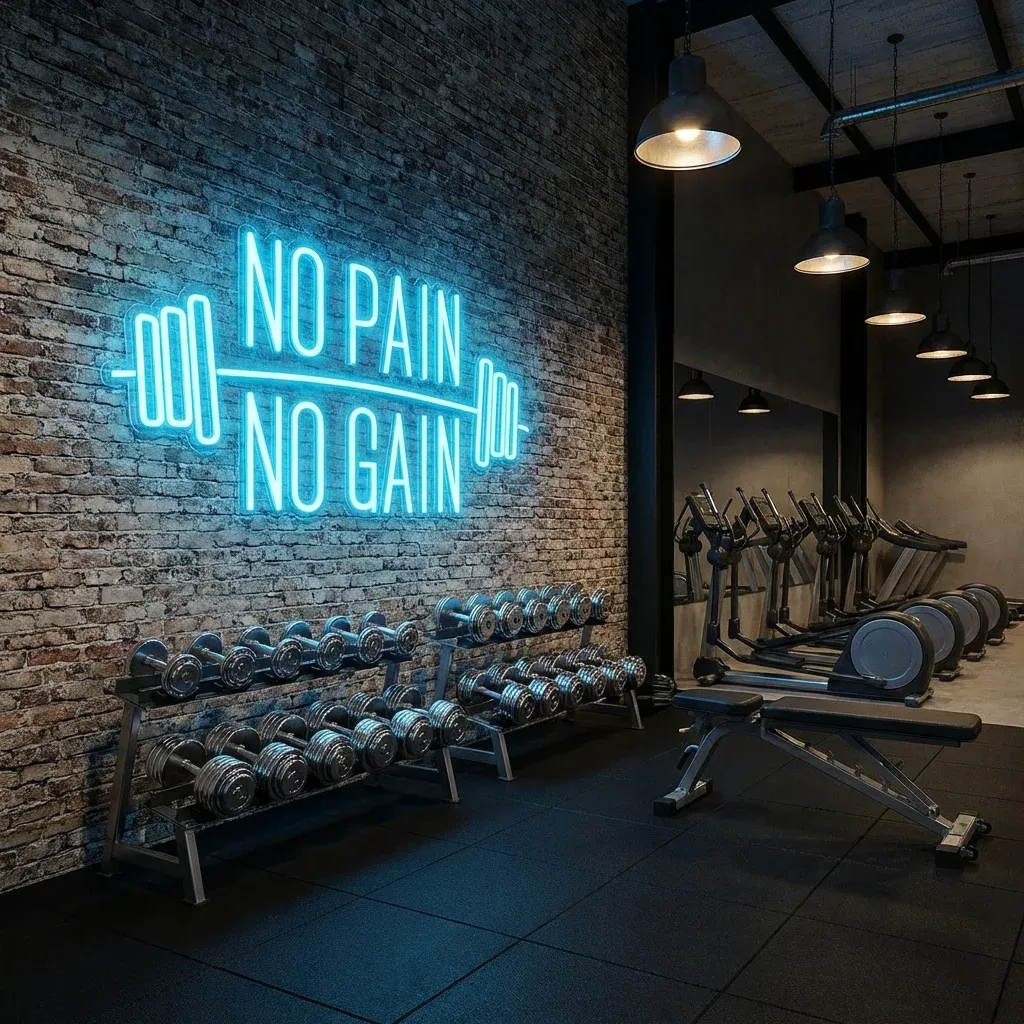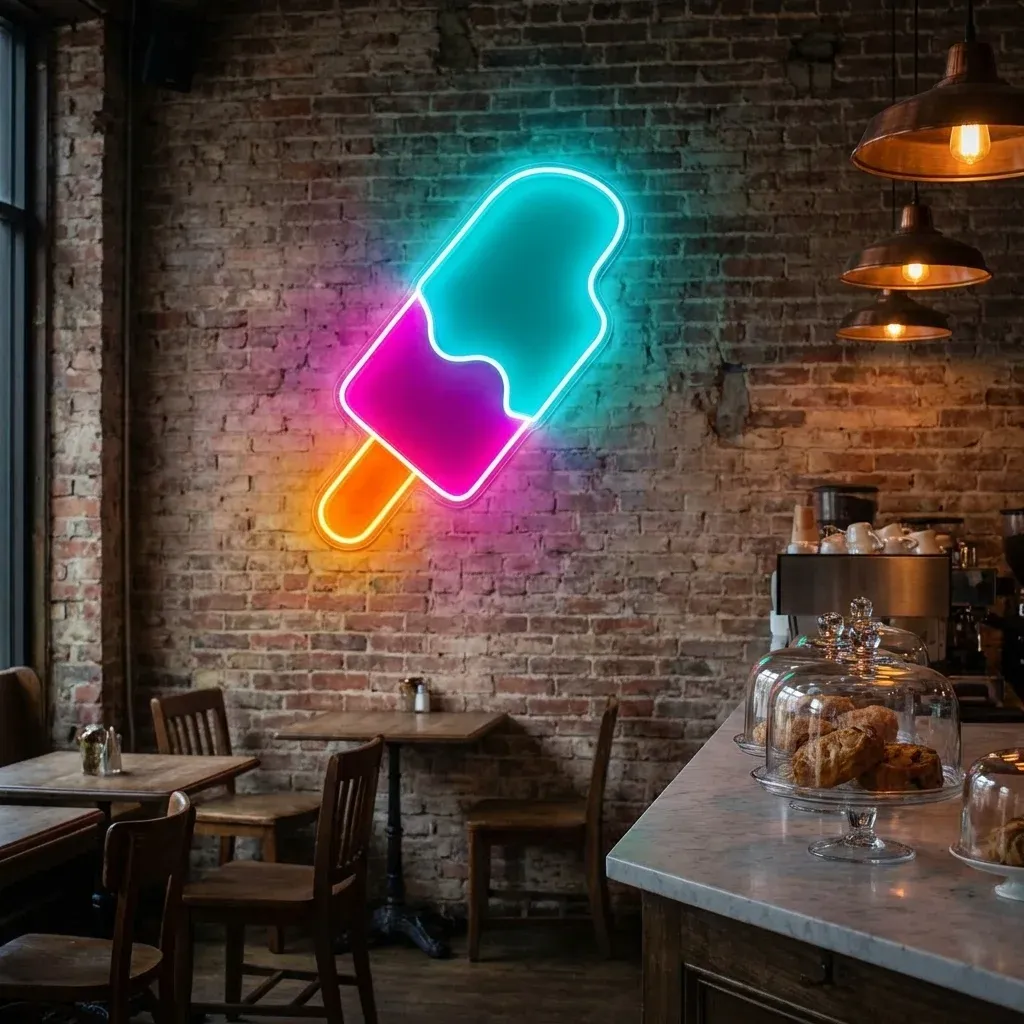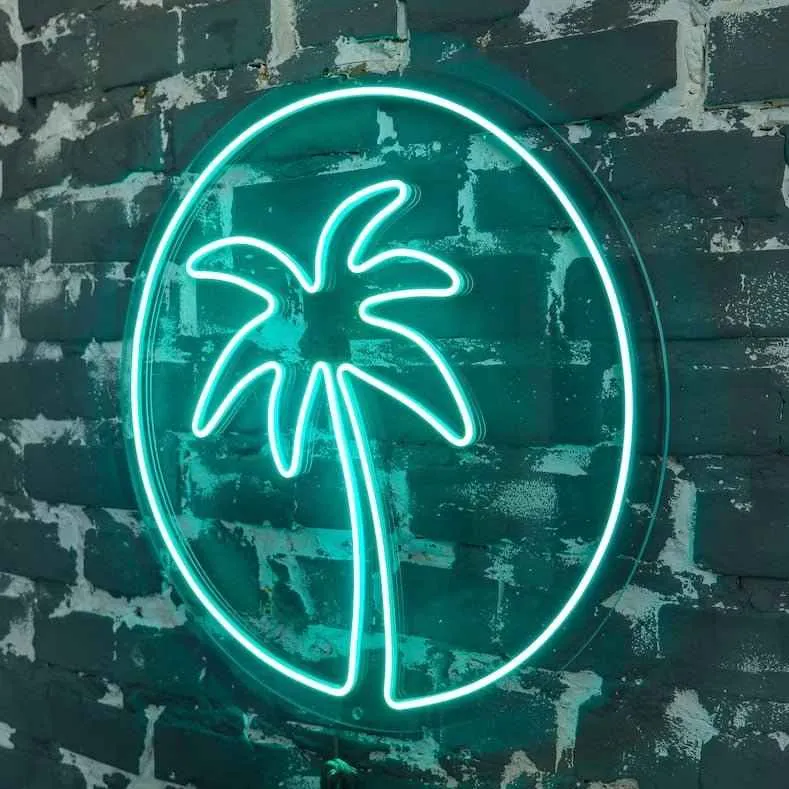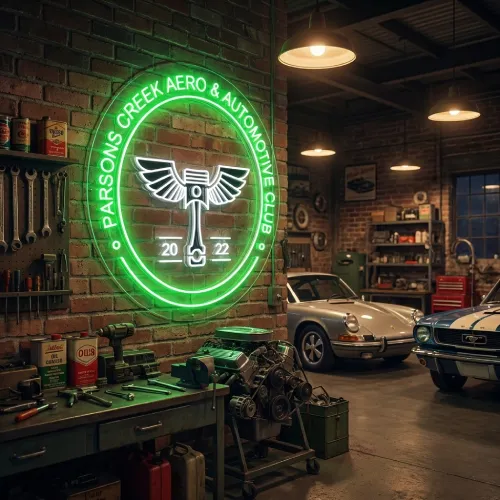
How to Tell a High-Quality LED Neon Sign From a Cheap One
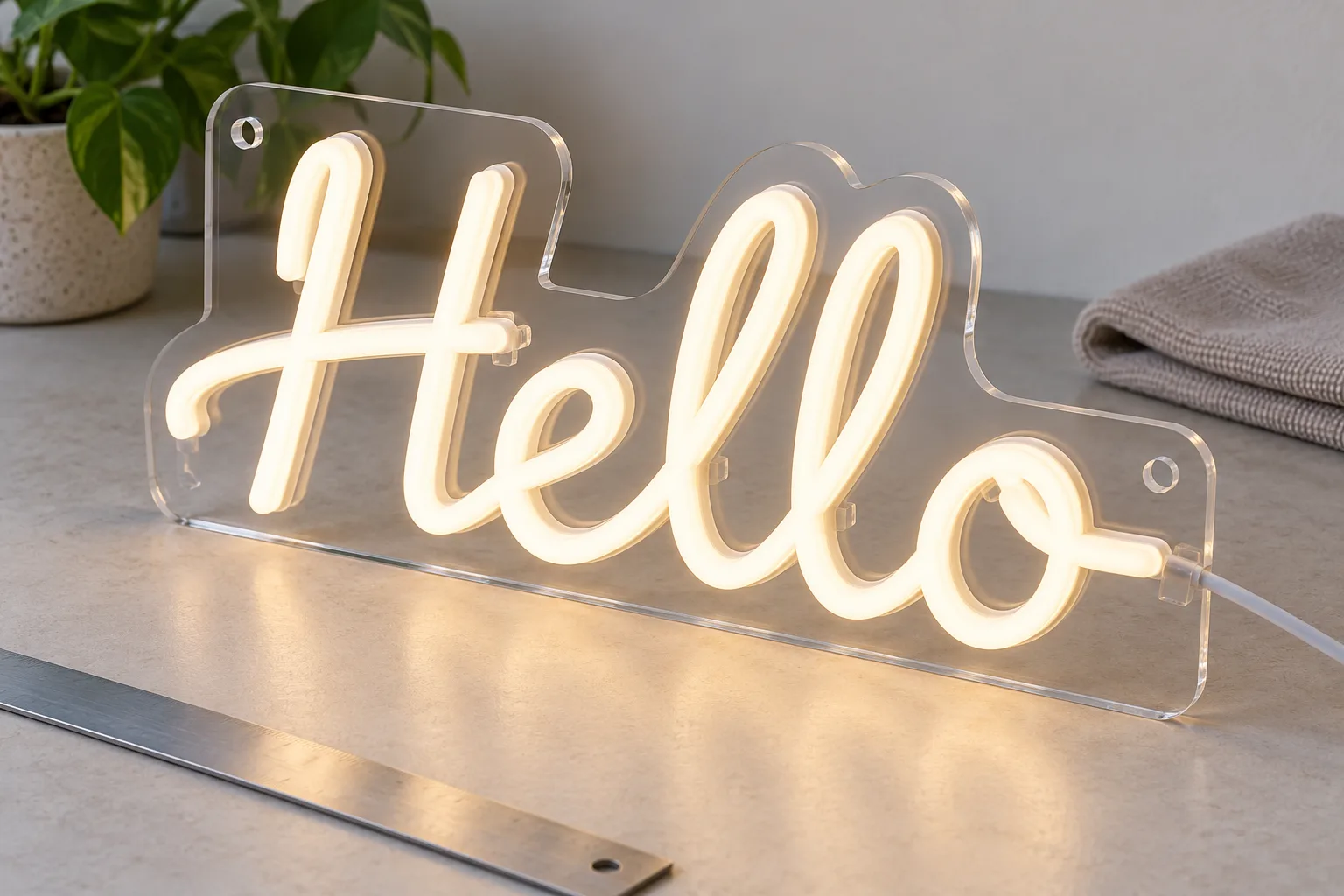
Assess an LED neon sign by the finished design, light consistency, construction, suitability for its location, documented components and after-sales support. Price, a polished mockup and a long lifespan claim cannot establish those things on their own.
A lower-priced sign may be a sensible choice for a simple brief. A more expensive sign should have a clear specification and evidence behind its claims. Here is what to examine before ordering, which questions to ask, and what you can check when the sign arrives.
First, establish what the sign is made from
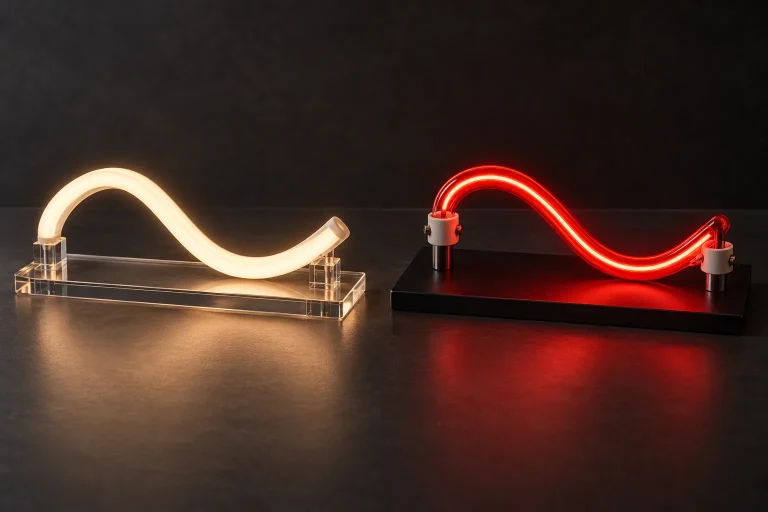
The word “neon” is used for different products. LED neon flex uses LEDs within a light-diffusing enclosure. Traditional glass neon uses gas-filled glass tubing. Some signs combine illuminated sections with printed artwork or other materials.
Ask which parts of your design will light up and how the remaining details will appear. This matters for logos containing gradients, fine lettering, filled shapes or several closely spaced lines. An attractive screen render can conceal a construction choice you would have judged differently in daylight.
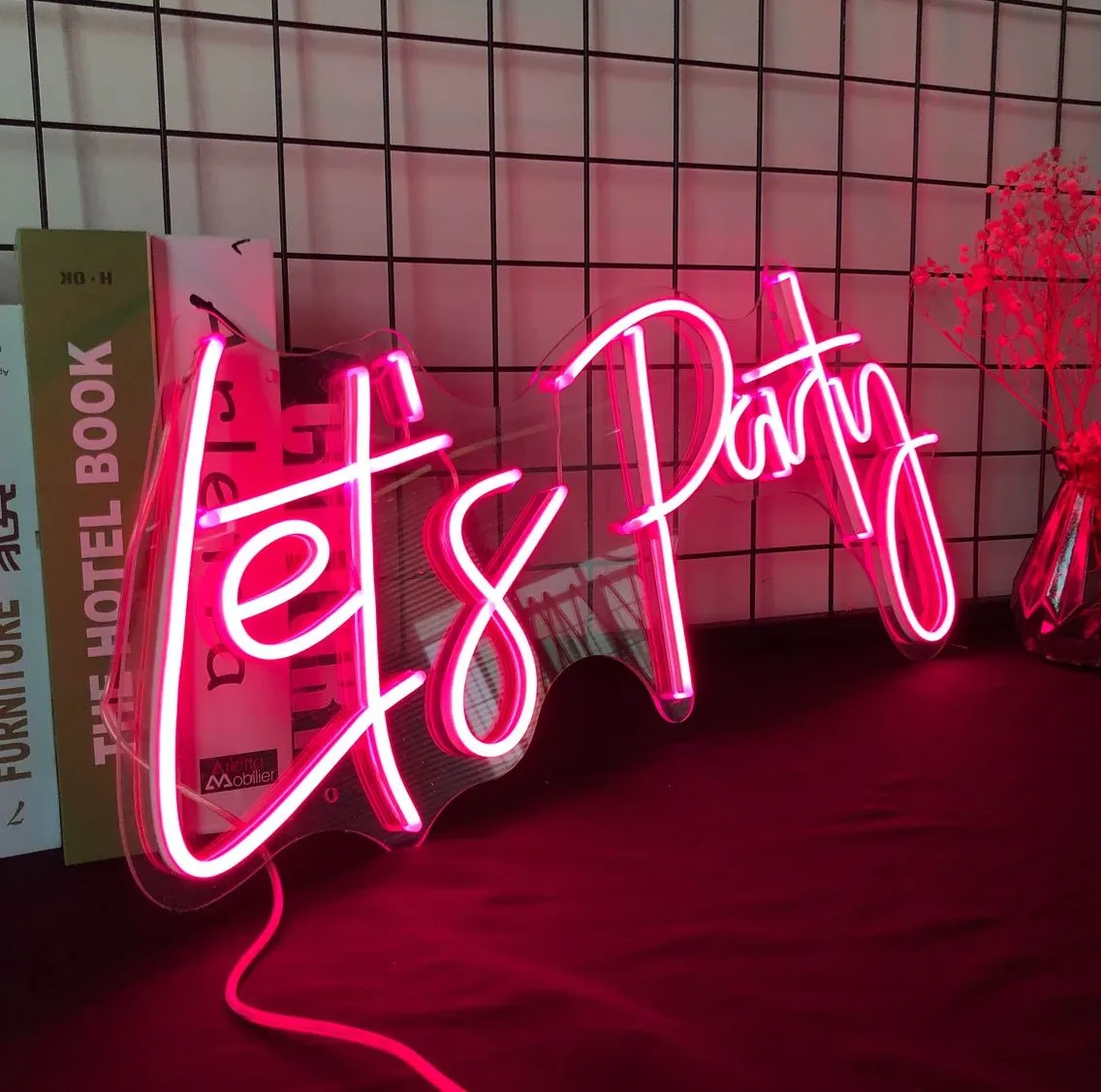
Look at front, side and switched-off photographs of the proposed type of sign. They help you understand the visible backing, tube depth, supports and cable exit. Our LED versus glass guide explains the construction differences in more detail.
What to check before buying
| Area | Evidence to ask for | What a weak answer leaves unresolved |
|---|---|---|
| Design | A proof showing the actual wording, layout and finished dimensions | Whether the sign will match your intended design and fit the space |
| Light appearance | Real photographs or video, including a close view and wider setting | Whether glow effects in a render are hiding the light’s appearance |
| Backing and finish | On/off and side views of the relevant construction | Visible edges, supports and overall appearance in daylight |
| Components | Identification of the supplied power supply and controls | Compatibility, documentation and replacement arrangements |
| Location | Written suitability for the intended environment | Whether indoor, sheltered and exposed locations are being confused |
| Delivery protection | Packaging and damage-reporting information | How the finished sign is protected and what to do if damaged |
| Support | Written warranty terms and a clear contact process | Who responds, what is covered and how faults are handled |
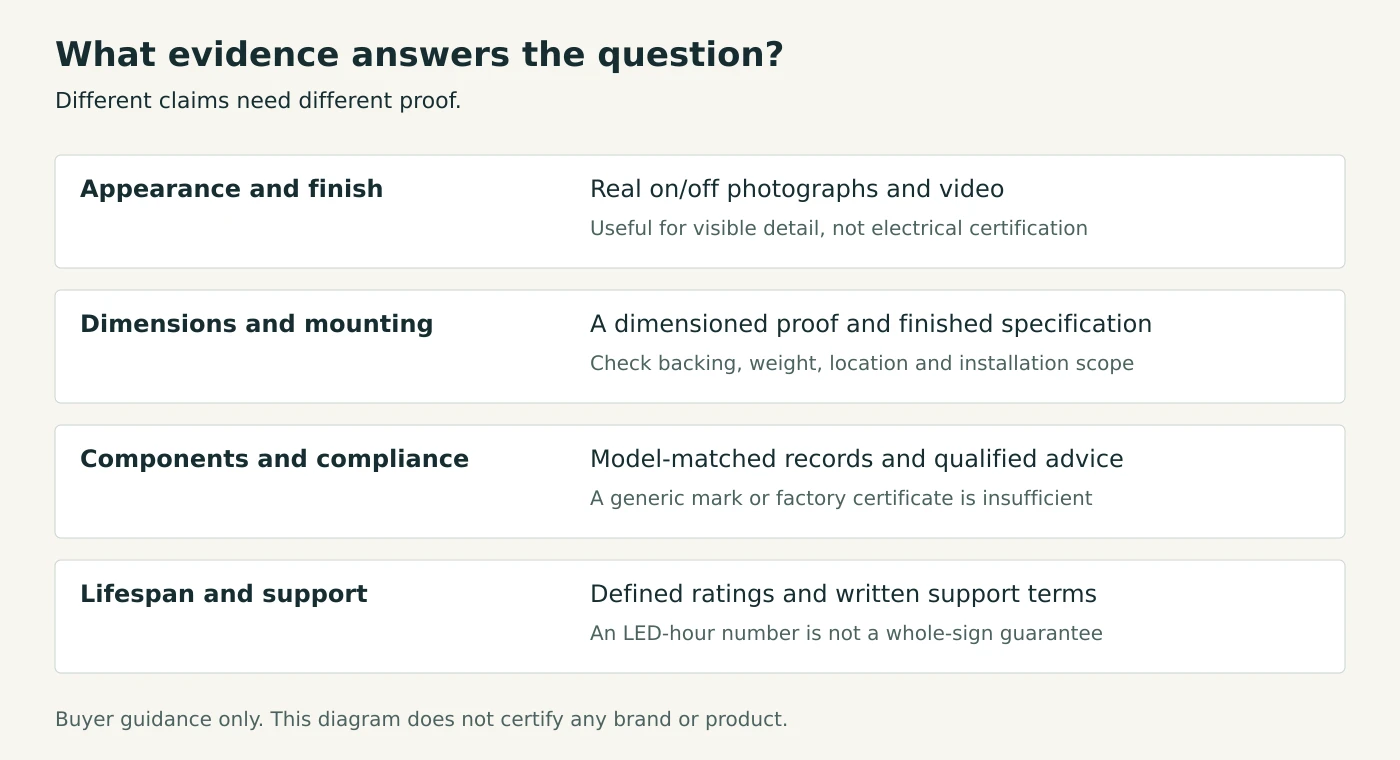
These checks assess different kinds of evidence. Photographs can help you judge finish, but they cannot certify electrical safety or prove how long the sign will work.
Examine the light without relying on dramatic glow
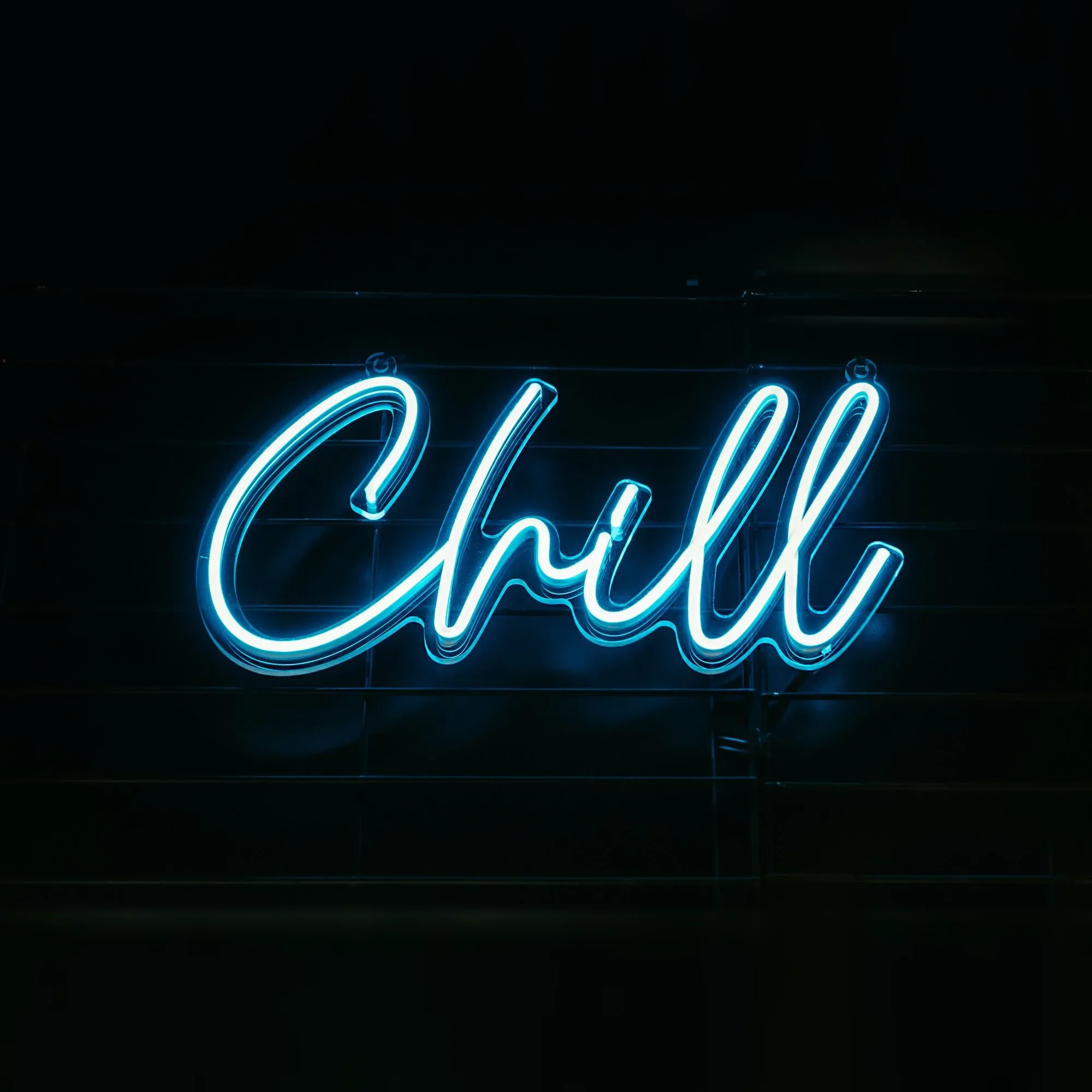
Look for a consistent appearance along the illuminated strokes at the intended brightness. Ask for a photograph taken with enough surrounding light to show the sign itself, not just an overexposed halo.
Visible dots, dark sections or uneven-looking bends are reasons to ask for a closer view. They are not, on their own, a diagnosis: camera exposure, reflections and the design’s construction can affect the image. A photograph and a short video of the actual supplied type of sign give you more to assess than a render alone.
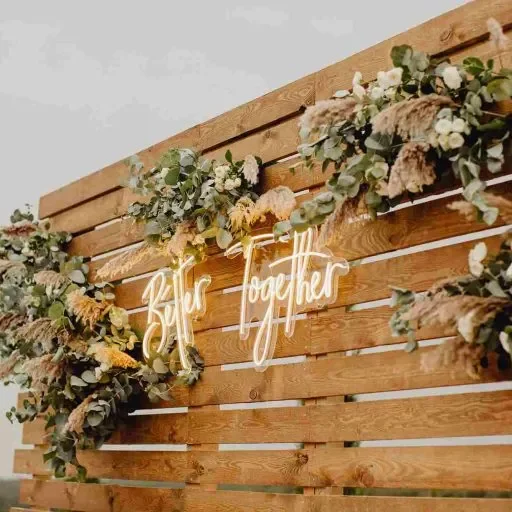
For a wedding backdrop or content wall, ask to see a camera demonstration at a relevant brightness. A sign can look steady to the eye and show bands or flicker in a recording because the lighting controls and camera settings interact. Do not treat an untested “flicker-free” description as a guarantee for every camera and dimming level.
Check the colour in a room setting as well as close up. Screens, white balance, wall colour and ambient light change its appearance. If colour matching is important for a brand, clarify what can be matched and what tolerance or visual sample is available before approval.
Inspect the backing and workmanship
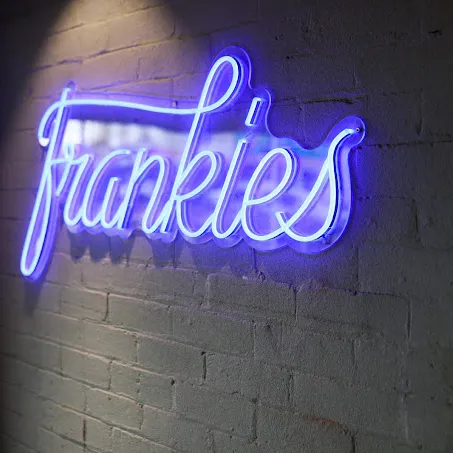
The backing is part of the finished product, especially when the sign is off. Examine the edge finish, the position of holes and the way the tubing follows the approved layout. Look for unexpected gaps, obvious damage or construction details that differ from what was agreed.
Check the full dimensions and the visible outline. A rectangular backing can be the right choice for one design; a backing cut around the lettering may suit another. Neither shape establishes quality by itself. The question is whether the backing suits the design, supports the supplied sign and matches the approved specification.
Avoid treating acrylic thickness as a standalone ranking. Suitable construction depends on the sign’s size, shape, supports and intended mounting. Ask for the finished weight and mounting requirements rather than assuming the thickest-looking panel is always best.
Ask about the power supply and controls
An LED neon sign is a system: the illuminated sign, power supply, connections and any controller or dimmer need to work together. A low-voltage sign still connects to mains power through its power supply.
Ask the seller to identify the supplied models, explain compatibility and provide the relevant instructions. Confirm how replacement components are obtained if needed. A physically similar connector is not enough to establish that another adaptor is suitable.
Plan where the power supply and controller will sit. They need the location, protection, ventilation and access specified for the supplied equipment. Do not hide them in a way that conflicts with those instructions simply to achieve a cleaner photograph.
Do not open electrical enclosures or alter wiring to inspect quality. Refer questions about components, damage or unusual operation to the supplier or an appropriately qualified person.
Check Australian compliance claims carefully
For an Australian purchase, ask who is responsible for supply and what evidence supports the applicable compliance requirements for the equipment provided.
The Electrical Equipment Safety System’s RCM guidance explains that the Regulatory Compliance Mark represents compliance with electrical-safety and ACMA schemes. The requirements depend on the equipment and applicable rules. A generic factory certificate or a photograph of a mark does not, by itself, show that the documents match your supplied models.
ACMA’s labelling guidance also makes clear that overseas marks such as CE or FCC do not automatically establish that a product can be supplied under Australian requirements.
Ask for model-matched information about the sign’s power supply and relevant controls or accessories. Do not assume that an Australian plug, an Australian website or an “Australian certified” heading settles the question. These are questions to resolve with the supplier; this guide does not certify any particular sign or brand.
Treat outdoor suitability as a complete setup
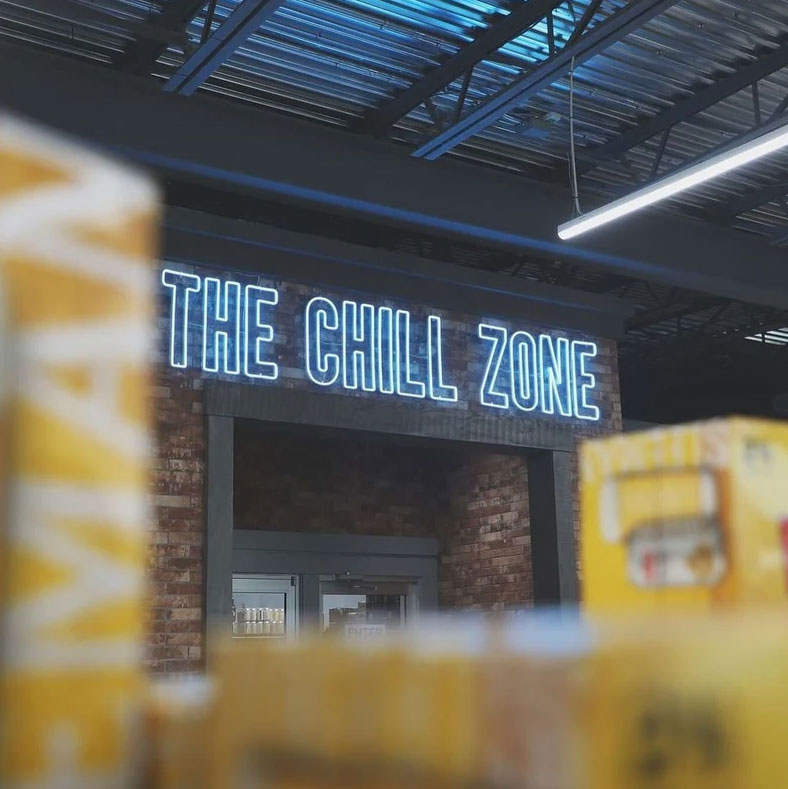
Explain where the sign will be used: inside, under a roof, in a shop window, or exposed to weather. Include rain, sun and the proposed power-supply location in the enquiry.
An ingress-protection rating relates to the equipment and conditions it covers. It does not automatically establish suitability for every outdoor environment or every component in the installation. Ask what the stated rating applies to, what exposure is permitted, and which parts require separate protection.
UV, heat, salt exposure and mounting conditions are additional questions to discuss. A description such as “waterproof neon” is too broad to replace the actual specification and installation instructions. Do not use an indoor sign outdoors based only on the promise that it will be under cover.
Read lifespan and warranty claims separately
An LED-hour rating is not a promise that every part of a complete sign will operate for that many hours. Ask what the number measures, what conditions apply, and whether it describes a component rating or evidence about the finished product.
The power supply, controls, connections and physical assembly also matter. Ask which parts the warranty covers, what indoor or outdoor conditions apply, and what the process is if something stops working. For an opening or fixed event, discuss how support would work within your timetable.
The ACCC explains that warranties are additional to consumer guarantees. Do not assume that all rights end when a written warranty expires. Read the terms and keep your order, proof and correspondence together.
Check the sign when it arrives
Keep the packaging until you have checked the order. Follow the supplied unpacking and inspection instructions and avoid bending or lifting the sign by the illuminated tubing or cable.
Compare the finished item with the approved proof: wording, dimensions, colour, backing and supplied accessories. Look for transit damage and photograph any issue before installation. If there is visible electrical damage, exposed wiring, a burning smell or another sign of unsafe operation, do not use it. Contact the supplier and obtain appropriate advice.
Only connect and test an apparently undamaged sign as directed by its supplied instructions. Check the agreed controls and light appearance before arranging the final installation. Do not substitute components or attempt repairs to make a faulty arrival work for an imminent event.
Your pre-order quality checklist
Before paying, you should be able to explain what will be supplied, how it will look, where it is suitable to use, how it will be displayed and who will help if there is a problem.
Ask for the proof and dimensions, relevant photographs, component information, environment limitations, mounting requirements, delivery arrangement and warranty terms. If something is important to your decision, keep the answer in writing with the quote.
Use our size guide to check fit and our price comparison guide to compare the total scope. Quality assessment becomes easier when the design and specification are clear.
LED neon quality questions
Does a higher price guarantee a better neon sign?
No. Price can reflect size, design complexity, construction, delivery or service. Assess the specification and evidence behind the claims. A smaller, simpler sign can legitimately cost less without being defective.
Can I judge LED neon quality from a mockup?
A mockup helps assess layout and intended appearance. It cannot prove workmanship, electrical compliance, brightness consistency or lifespan. Ask for real product photographs and relevant documentation as well.
Does an RCM logo mean the complete sign has government approval?
The RCM represents compliance with applicable schemes; it is not a substitute for checking which equipment and records the claim covers. Ask the supplier for information matching the actual models provided, including the power supply and relevant accessories.
Is a thicker acrylic backing always better?
No. Suitability depends on the sign’s size, shape, weight, support and mounting design. Ask for the specified finished construction and installation requirements rather than judging thickness alone.
What should I do if the sign arrives damaged?
Keep the packaging, photograph the damage and contact the supplier before installation. Do not use equipment with visible electrical damage or attempt to repair it yourself. Follow the supplier’s reporting and support instructions.
Ask for the details before approving your design
Create a custom text sign or upload your logo for a free design and quote. Tell us where it will be used, the space available and any required date. Ask for the relevant specifications and support information with your order so you can make an informed choice.
Frequently Asked Questions
Still not convinced?
Our dedication to quality, customisation, affordability, and customer service, is what we believe makes us the best choice for custom LED neon signs. Here’s a quick recap of what you can expect from Mr & Mrs Neon.
- High-Quality Materials: Durable, energy-efficient, and designed to last.
- Extensive Customisation: Tailored to meet your vision, with free sign designs.
- Transparent Pricing: Super competitive rates with no hidden fees, not to mention our Price Beat Guarantee!
- Reliable Customer Service: Responsive support and guidance from start to finish.
- Extended 2-Year Warranty: Extended warranty on all sign orders, guarantee!
Ready to create your dream Neon Sign?
Need help? Talk to us
Ready to Invest in a Custom LED Neon Sign?
Whether you’re looking to enhance your business visibility or create personalised decor, we’re here to make the process simple and rewarding. Our commitment to quality, competitive pricing, and exceptional customer service ensures you receive a product that exceeds your expectations. Start by getting in touch with the team to get a free design & quote and see firsthand why we’re the leading company for custom LED neon signs.
Sign up for
$50 voucher
Enter your email to instantly receive $50 off your first order*


Recommended reading
-
How Much Does a Custom Neon Sign Cost in Australia?
See our indicative neon sign budgets, dated catalogue prices and cost drivers. Compare inclusions and get a quote for your actual design.
-
What Size Neon Sign Do I Need? Complete Size Guide
Choose a neon sign size for your wall, wedding backdrop or business. Compare dimensions, test proportions and check your design before ordering.
-
LED Neon vs Glass Neon: Which Sign Should You Choose?
Compare LED neon and glass neon for appearance, events, business signs, costs and repair. Choose by the design, location and complete specification.
-
Affordable Custom Neon Signs Australia
How to Find Cheap Custom Neon Signs Without Compromising on Style If you’re searching for cheap custom neon signs Australia…
-
Premium Neon Signs Australia: Are They Worth It?
Premium Neon Signs Worth It? If you are weighing up whether premium neon signs Australia buyers often choose are actually…
-
Custom Neon Signs Australia: Complete Guide
If you’re researching custom neon signs Australia, you’re likely looking for more than something that simply lights up a wall….